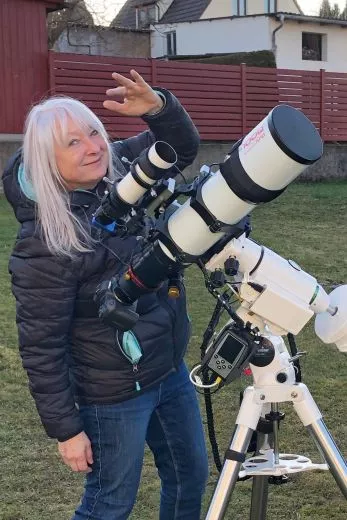
The first interview in our astrophotography series for you, with Andrea Dievernich
The first interview in our astrophotography series for you, with Andrea Dievernich
Hello fellow stargazers! Today, the first interview in our astrophotography series is with Andrea Dievernich.Enjoy reading!
A big thank you to Rudi and Karl Kloß for letting me be a part of it! 😍😍😍 A passion was born! ❤️❤️❤️ I've been involved for a year and a half now, and I have to say, the learning curve has been very steep, which I also owe to the many members I constantly consulted.
How I got into this hobby:
Photography is my passion. Through it, I met the professional photographer and amateur astronomer Windried Berberich, who was enthusiastic about my pictures.
There was a planned lunar/Mars observation, and I received an invitation to his observatory.
My first glimpse through a telescope of Mars, Saturn, Andromeda, and M13 was indescribably beautiful.
That evening, I photographed the Milky Way for the first time.
There were other amateur astrophotographers present, taking pictures through their telescopes.
I was really excited and wanted to try it too.
Winfried advised against it. Too expensive, Andrea. From ¤5,000 upwards. Then you spend nights photographing an object and just as much time processing the images. Better to forget it.
The next day, I joined a group called "Astrophotography for Beginners."
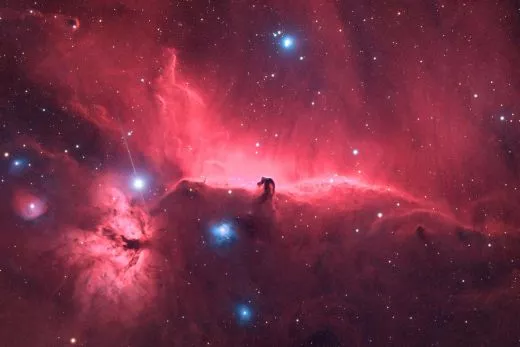
I started by looking at the beautiful pictures and came across the famous Horsehead Nebula.
Love at first sight! ❤️❤️❤️ I absolutely had to do this, no matter what anyone else thought.
I then continued studying the posts. What equipment were they using? How long were the exposure times? Then I finally realized what terms like gain, APO, and ZWOASI meant. This led to some initial doubts about whether I could do it, even though I also read that I could start this hobby with my existing camera equipment.
So I started googling and asking members for advice. After half a year of research, I decided, "This is it." After thorough research, I opted for an HEQ5 Pro GoTo mount. That was at the end of September 2020.
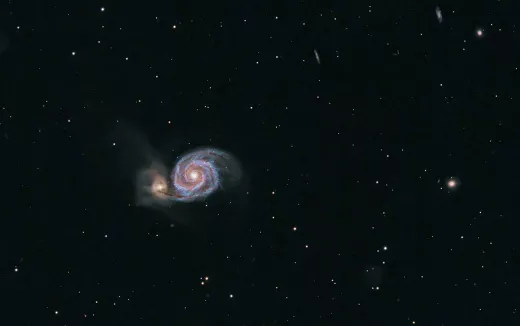
In October, I set up my first telescope. And there it was: NGC 7000, my first target. Only one minute per image, but... I was so happy! Next up were the Pleiades and Andromeda.
Then the weather was bad until Christmas.
Finally, on Christmas Eve, I was able to observe my object of desire again! 😍😍😍😍 I realized I needed to learn to guide.
I bombarded the members with questions again. Finally, I decided on the MGEN 3.
However, I couldn't set it up again until April. There was a very long break in between. But everything worked perfectly.
After setting it up about seven times, I decided to buy a telescope.
My criteria were light weight, easy setup, very good star images for a full-frame camera, and a focal length suitable for all the nebulae I was interested in.
So, it would be an APO. I opted for a new model from TS, which, however, was still unavailable after six months due to supply shortages. So, I decided on the TS100Q, which arrived at the end of December.
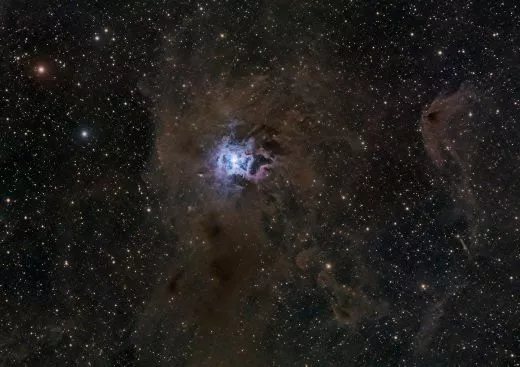
A dream come true! The device was exactly what I wanted. I attached the narrowband filter and off I went.
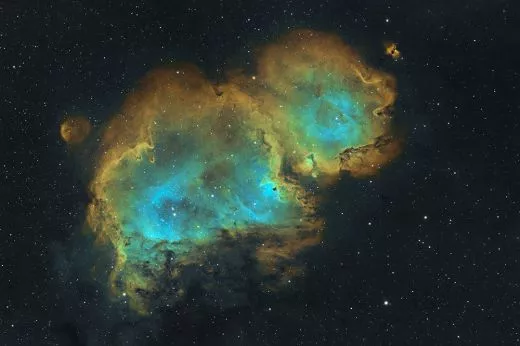
Finally, no more star mush. Finally, the Hubble palette! 😍😍😍 Such beautiful star images! 😍😍😍
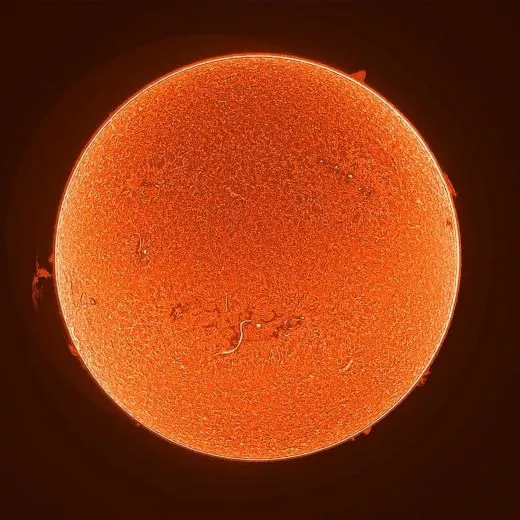
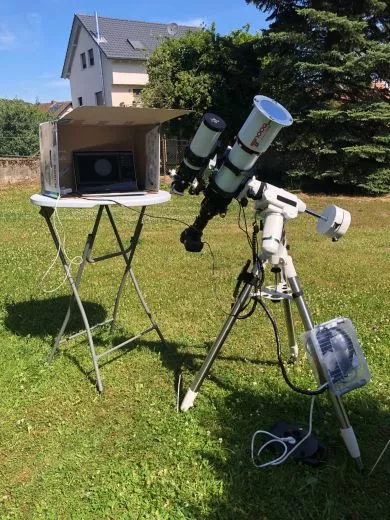
I thought to myself, now you can photograph at night, but that's not so often, why not photograph the sun? 😊🙃
Well, I continued with the Lunt 60/500. The first pictures were very disappointing. It didn't work. And everyone says it's impossible with a Canon. Now I'm looking into a planetary camera. I haven't decided yet.
What I want to say about image processing is that it was a difficult, rocky road that almost drove me crazy. I watched many tutorials by Daniel N. and Frank S. and finally found my workflow.
When starting this fascinating hobby, you should first... Be clear, everything is possible; you need self-confidence, perseverance, patience, and diligence. Learning by doing.
One step at a time. Good things take time.
With that in mind, always CS
Price:
0,00 EUR
VAT excl. excl. Shipping costs