- Customer group: Guest
-


- Register
- Login
- Your account
- Home

- Details
Products description
The Askar (Sharpstar) telescope series
Why we like to recommend Askar (SharpStar) telescopes for astrophotographyAskar, a subsidiary of Sharpstar, has launched a wide range of high-quality telescopes in recent years, establishing itself in a very short time.
All instruments delivered to us have been thoroughly inspected and found to be satisfactory.
Each instrument is factory-tested and certified.
Nevertheless, they are tested again before delivery to our customers so that you can use them as soon as possible after receipt and enjoy them for a long time.
All Askar instruments are well-designed and mechanically manufactured to high quality.
The focusers of the FRA and PHQ series are generously dimensioned and reliably hold even heavy camera and accessory combinations. The integrated rotation function works flawlessly and without tilting.
We believe that our customers will enjoy long-term enjoyment and success with these telescopes.
Since we're often asked about the differences, especially between the FRA and PHQ series, we've tried to provide a brief overview here.
-- Click HERE for the Askar products --
The Askar FMA series
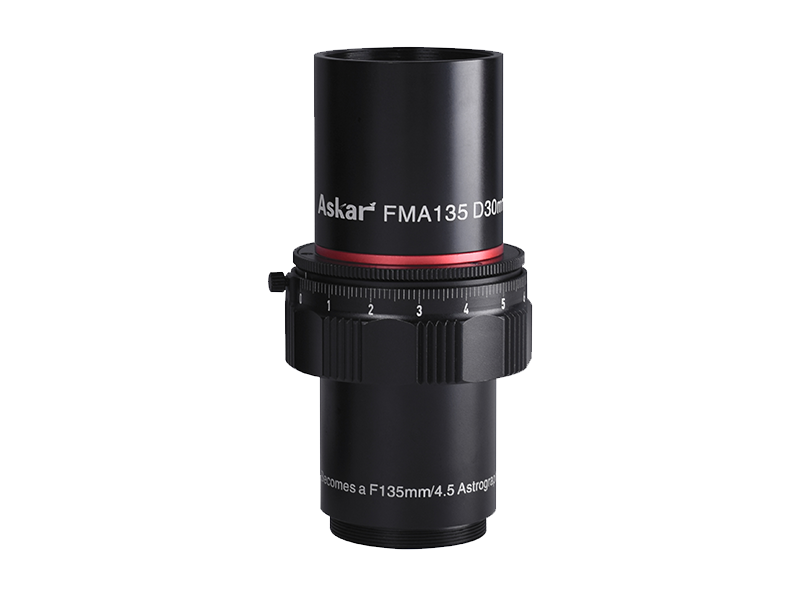
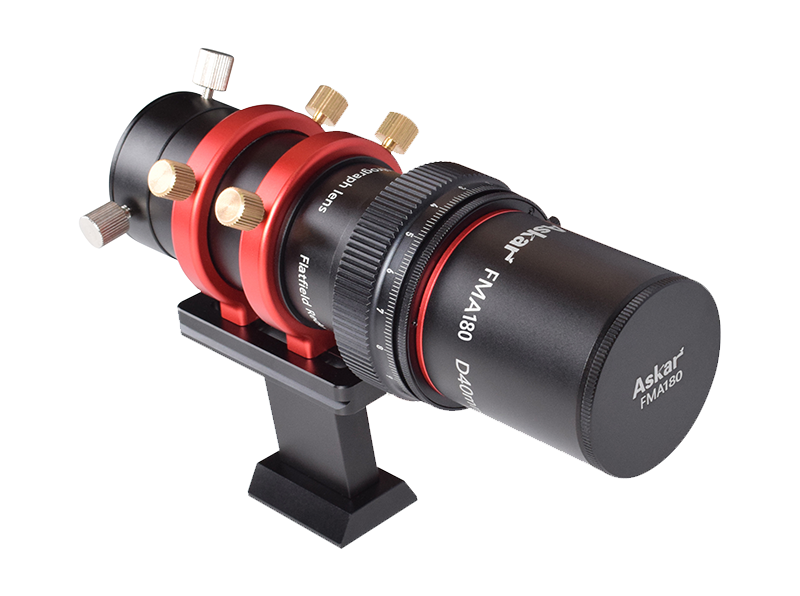
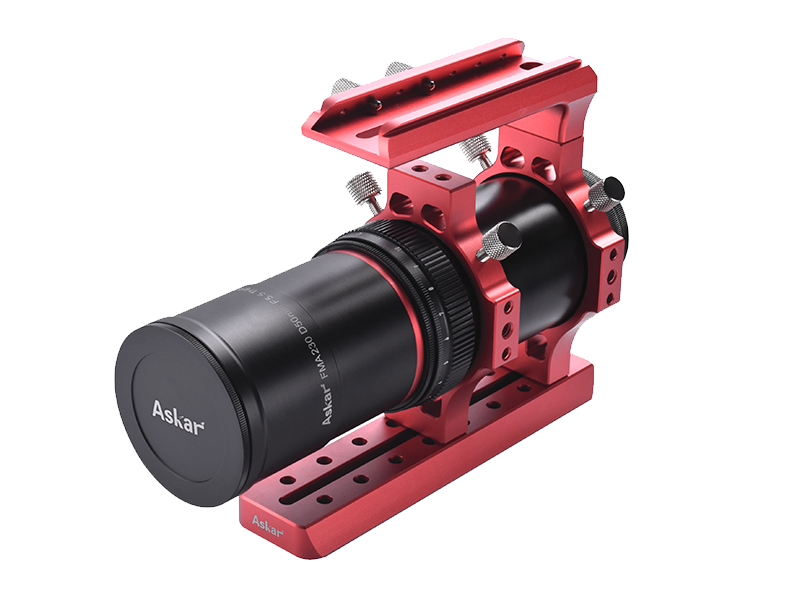
The FMA series includes small, compact refractors reminiscent of manual camera lenses.
Devices in this series are Askar's most affordable and smallest focal lengths, yet still offer a relatively fast aperture ratio.
Focusing is achieved via a lockable helical focuser, which is very sensitive and allows for precise adjustment of the focus point.
Depending on the configuration, all FMA models can be used photographically, visually, or as a finder/guide scope, making them universally applicable.
This variety of applications and the compact design make the FMA series extremely interesting for mobile use, but stationary stargazers also like to use these devices for wide-field imaging.
These compact optics are also ideal for use alongside long focal lengths, for example, to capture a second image of a region of the sky.
The optical design is based on three lenses in the lens and the corresponding reducer, which simultaneously corrects the image field for astrophotography.
Due to the chosen design, the required sensor distance from the reducer to the sensor is 55mm, although this distance can be partially varied by arranging the components differently. Depending on the model, the image field is suitable for sensors up to APS-C or even full-frame sensors.
The color correction of the FMA lenses is generally considered good, although a (more or less pronounced, depending on the model) blue fringing around stars is noticeable. This can be largely reduced or removed in subsequent image processing, but should not be left unmentioned here.
This is due, among other things, to the fast aperture ratio of the devices.
For technical details on the individual devices in the FMA series, please refer to the product description for the respective model.
The Askar FRA Series
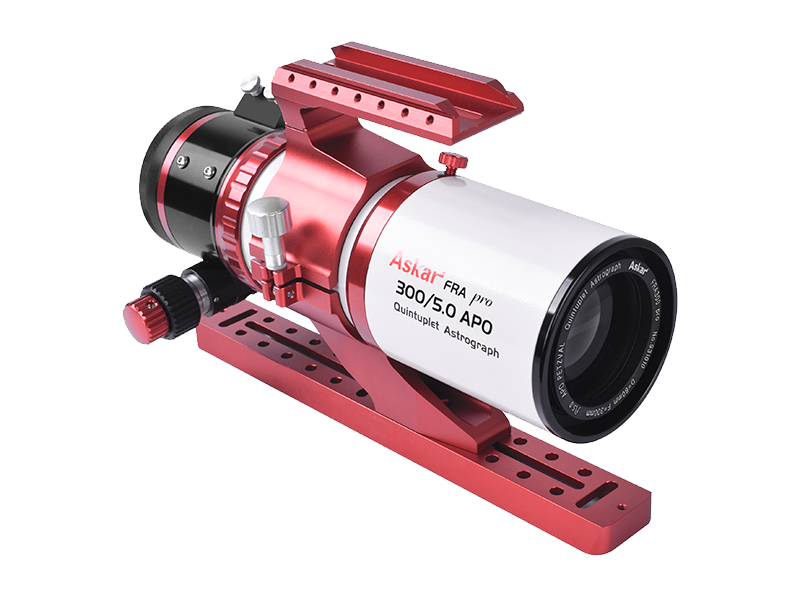
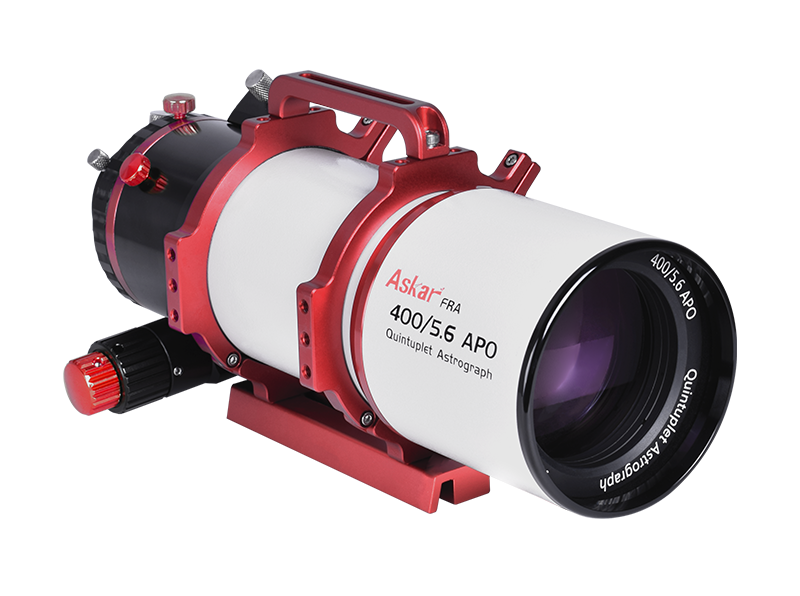
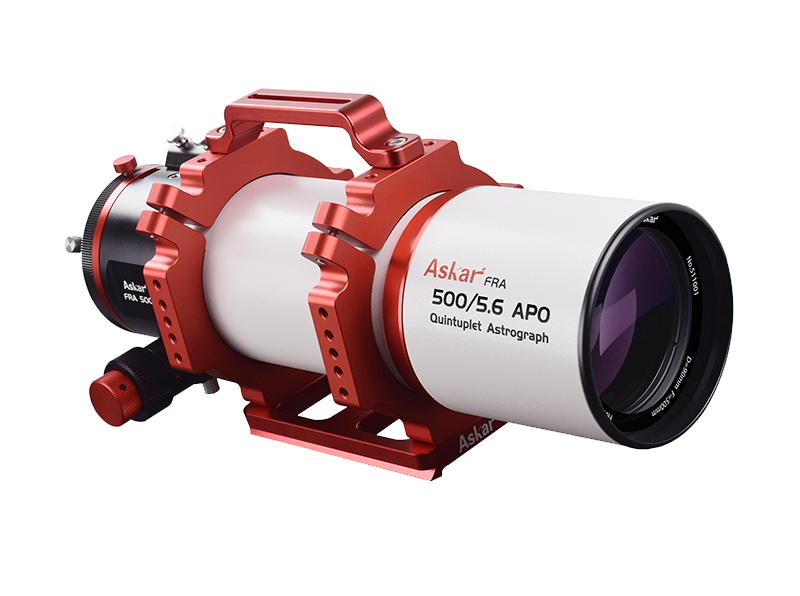
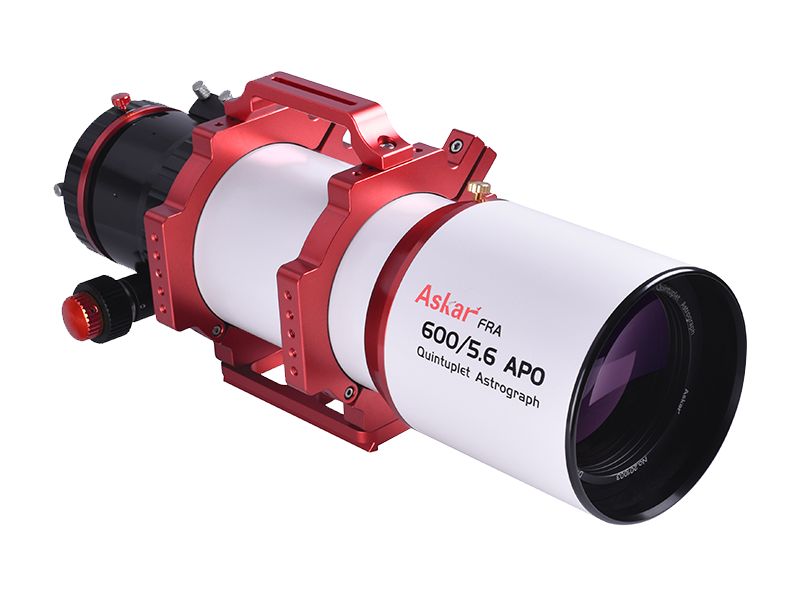
The FRA series was developed by Askar specifically for astrophotography.
The name FRA is derived from "Flat-field Refractive Astrograph," which means a device with a flat image field suitable for astrophotography. This is a somewhat confusing naming convention, as this is no longer a unique feature of this series, especially since the introduction of the PHQ series. More on that later.
As already mentioned, the FRA series features a flat image field, specifically designed for astrophotography. Due to the Petzval-inspired optical design and the built-in corrector, there is no fixed distance between the corrector and the camera sensor. In other words, once the camera is mounted on an FRA, all you have to do is focus and you immediately have an image field corrected for photography.
This, in turn, offers the possibility of combining any conceivable accessory in the camera system, be it a filter wheel/drawer, electric rotator, or an off-axis guider. Even the subsequent addition of an additional filter, e.g., a duo-narrowband filter in front of a color camera, is possible at any time without having to adjust any distances. You simply need to adjust the focus accordingly, and you're ready to go.
It couldn't be easier!
Askar has optimized the photographic performance of the FRA series to a compromise between the best possible color correction and the fastest possible aperture ratio.
The FRA300 Pro benefited the most from this with an aperture ratio of f/5 at a focal length of 300mm, thus earning the "Pro" designation.
Its larger siblings, the FRA400/500 and 600, operate with an aperture ratio of f/5.6, which still makes them among the faster devices in this category.
The photographic performance of the FRA series can be rated as very good overall.
The corrected field of view of all devices is designed for sensors up to full-frame, while the star image and color remain largely neutral.
Only at the edge of the field of view is there a slight color shift, which is due to the optical design.
With an optional reducer, the FRA400/500 and 600 can be further reduced in focal length and the aperture ratio expanded to f/3.9. The corrected field of view is still maintained up to full-frame sensors. However, one must expect a loss of color correction, especially when using color cameras. This effect can be minimized when using monochrome cameras and corresponding RGB filters. The reducers can fully exploit their strengths when using narrowband filters.
A reducer also limits the required distance to the sensor to 55mm from the M48 thread, which limits the convenience of the flat-field APO.
Our recommendation:
When using an FRA series camera without a reducer, we recommend any camera, whether RGB or mono, up to full-frame.
Whether you're just getting started with astrophotography or are already an experienced astrophotographer, you can't go wrong with an FRA.
When using an optional FRA series reducer and the resulting aperture ratio of f/3.9, we recommend a monochrome camera with up to full-frame sensors and appropriate RGB or narrowband filters.
We recommend using an FRA reducer for experienced astrophotographers with appropriate image processing skills.
We ultimately leave the decision to our customers, of course.
The Askar PHQ Series
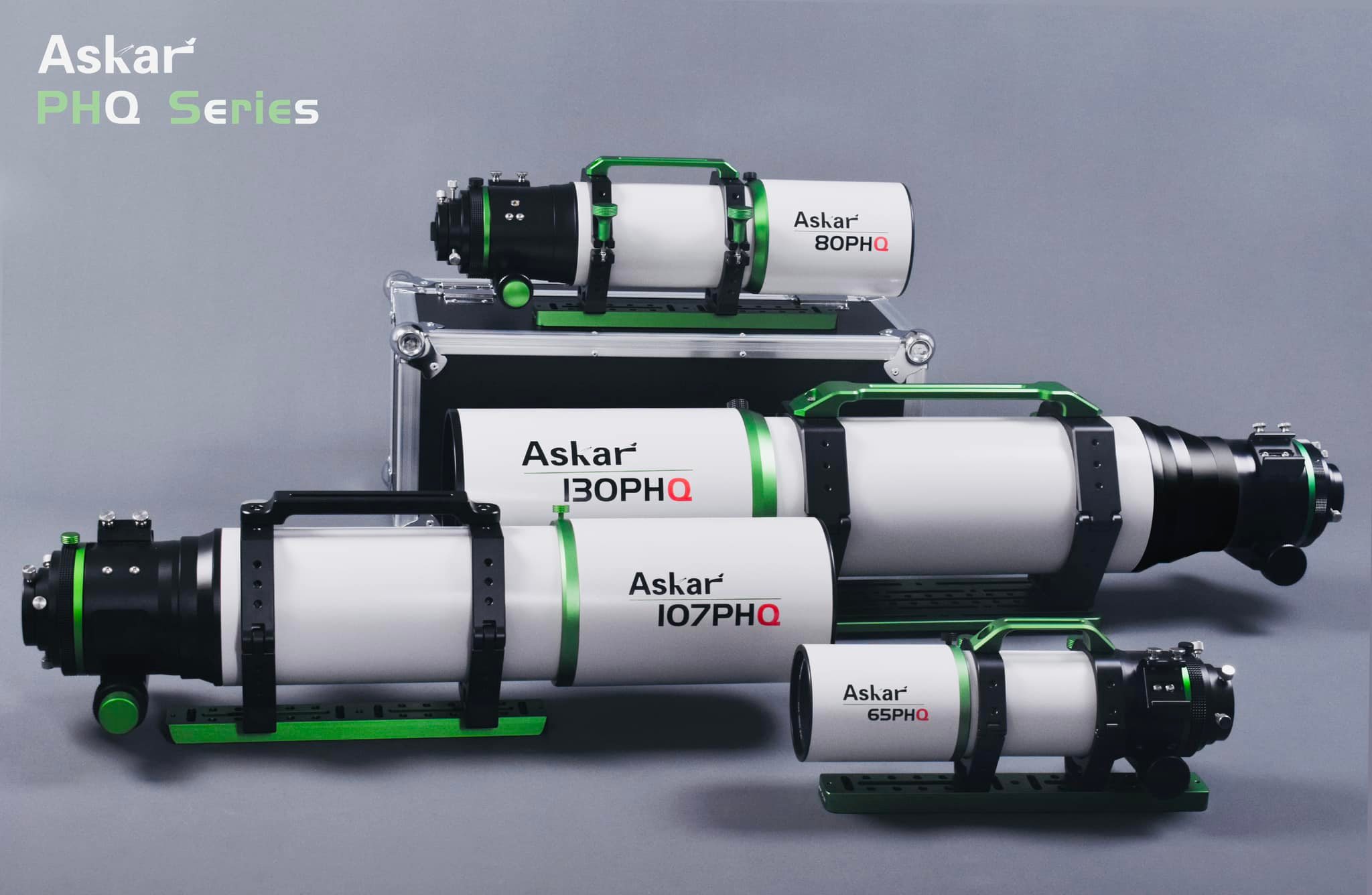
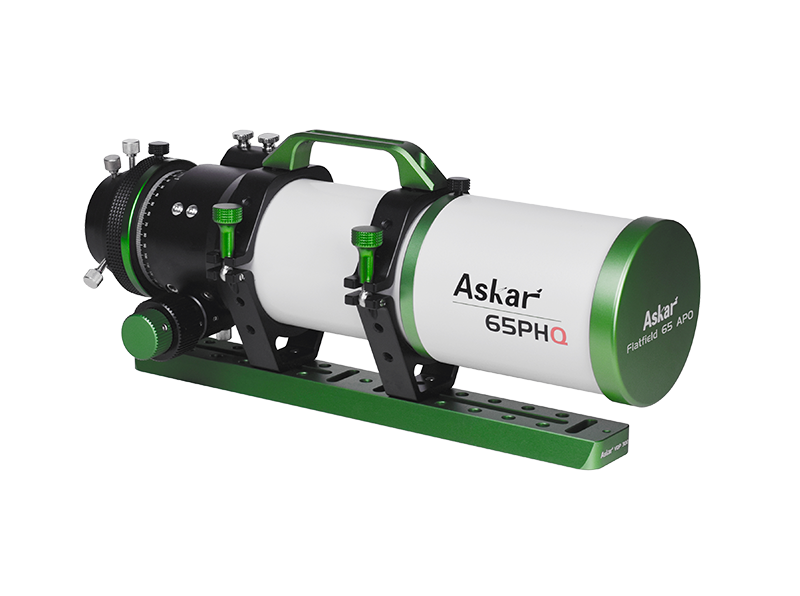
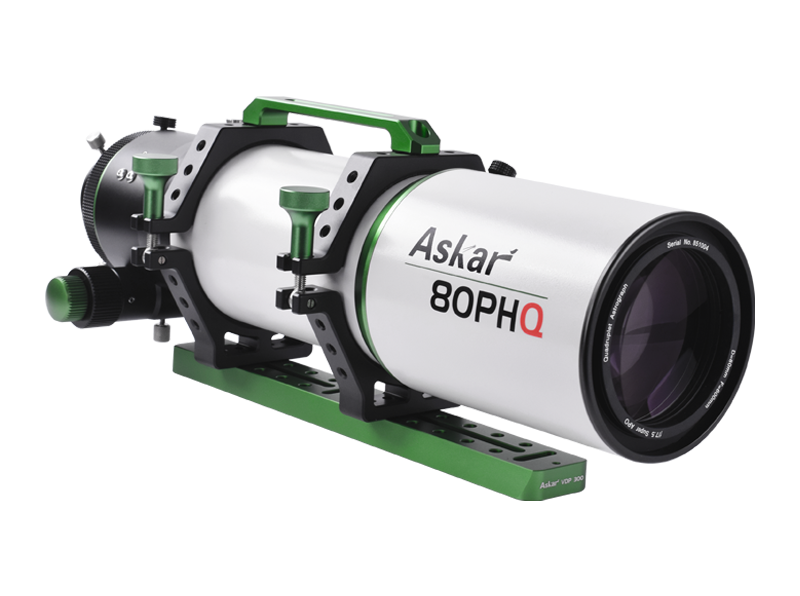
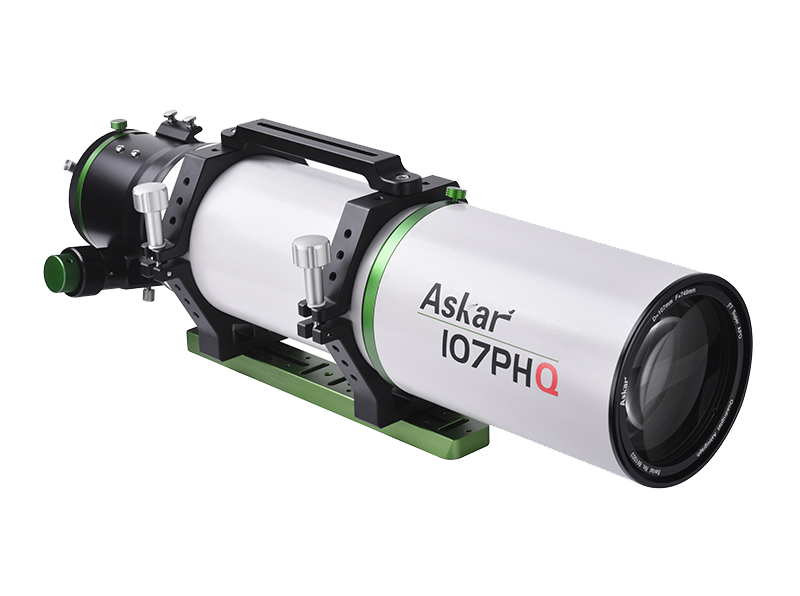
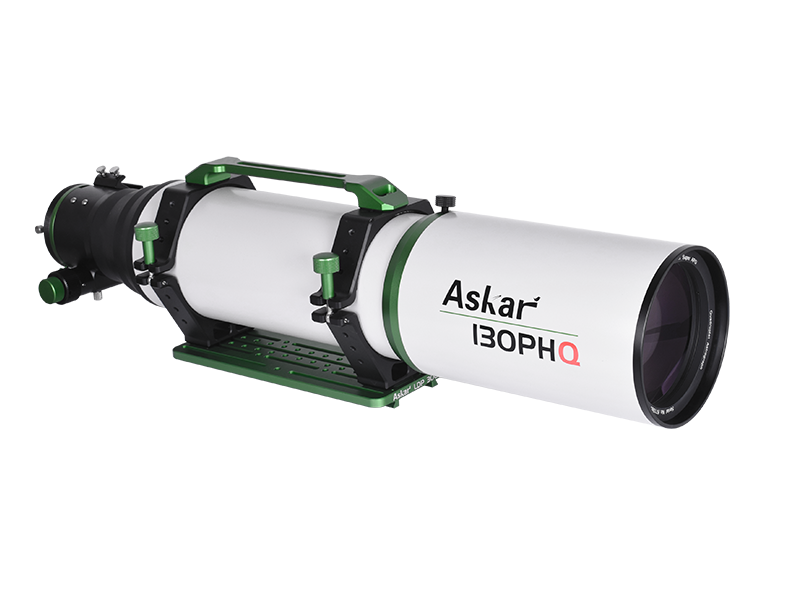
As with the FRA series, the PHQ series also uses an optical design inspired by the Petzval. Here, too, the corrector is permanently installed in the tube, which offers all the advantages of adapting the camera and accessories as with the FRA series.
In other words, once the camera is mounted on a PHQ model, all you have to do is focus and you immediately have a corrected image field for photography.
This, in turn, offers the possibility of combining any conceivable accessory in the camera system, be it a filter wheel/drawer, electric rotator, or an off-axis guider. Even the subsequent addition of an additional filter, e.g., a double-narrowband filter in front of a color camera, is possible at any time without having to correct any distances. You only need to correct the focus accordingly, and you can continue.
It couldn't be easier!
With the PHQ series, Askar has placed uncompromising emphasis on imaging performance and color correction.
These APOs offer longer focal lengths at a smaller aperture ratio than the FRA series, but reward the patient astrophotographer with excellent color correction and field correction for astrophotography up to full-frame sensors, and depending on the model, even beyond.
We have already tested the 80PHQ, 107PHQ, and 130PHQ with a full-frame RGB camera equipped with the IMX455 sensor and were impressed by the optical performance of these models. The entire field of the sensor was illuminated, excellently corrected, and largely neutral color reproduction, even at the edges of the image.
The photographic performance of the PHQ models has so far completely impressed us.
Askar also offers model-specific reducers for the PHQ models to shorten the focal length and increase the aperture ratio.
Please refer to the product descriptions for detailed information on the appropriate reducers.
The 65PHQ, 80PHQ, and 130PHQ models retain full field correction up to full-frame sensors. Only the reducer for the 107PHQ is limited to sensors up to APS-C format. However, these are fully illuminated and the image correction is retained.
With the reducer, the working distance to the sensor is set to 55mm from the M48 thread, and the convenience of freely selecting the distance is lost.
However, the choice of various thread adapters remains, thus providing somewhat more freedom in adaptation options/distances to the sensor depending on the selected connection thread.
Here, too, please refer to the product description of the respective reducer for the exact distances.
Thanks to the forgiving optical design of the PHQ series, the reducers have only minimal impact on color reproduction; even RGB cameras can be used with the reducers with confidence.
Our Recommendation
With or without a reducer, the PHQ series models are fully compatible with all sensors up to full-frame (107PHQ + reducers up to APS-C), without significant loss of color or field correction.
Whether mobile or stationary, the PHQ series offers the right solution for every application.
Beginners and experienced astrophotographers alike should enjoy long-term success with a PHQ series model.
Whether you choose a model from any series or need help deciding, please feel free to contact us for final advice.
-- Click HERE for Askar products --
Clear Nights
Telescope Specialists
This Product was added to our catalogue on 11/01/2023.
Categories
Quick purchase
Welcome back!
Last viewed:

Manufacturer
Shipping country
Payment methods

Die Box kann unter tpl_modified/boxes/box_miscellaneous.html verändert werden. Die Sprachvariablen befinden sich in der Datei tpl_modified/lang/german/lang_german.custom.
Teleskop-Spezialisten © 2026 | Template © 2009-2026 by modified eCommerce Shopsoftware